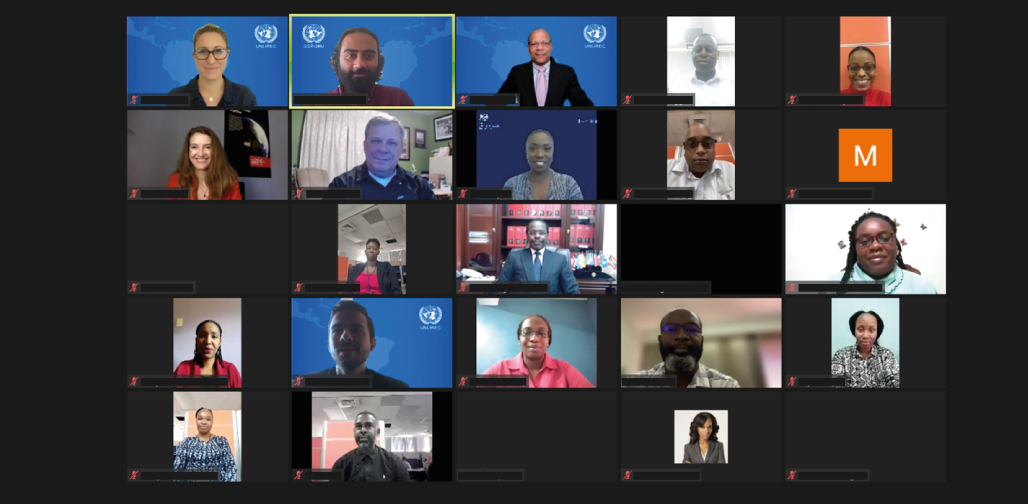
From 7 – 10 March, the United Nations Regional Centre for Peace, Disarmament and Development in Latin America and the Caribbean (UNLIREC), delivered a Cartridge Case Triage Course in Trinidad and Tobago.
One of the critical components of a successful preventive crime gun intelligence program is comprehensive data collection of firearm-related evidence and rapid dissemination of results. The cornerstone of such a program is ballistic imaging technology. To maximize the effectiveness of such technology it is essential that fired cartridge cases from crime scenes and recovered firearms be acquired quickly with as few replicates as possible, which will dilute the database, reducing its effectiveness. A recognized process to accomplish this is to triage the multiple recovered cartridge cases for purposes of maximizing effectiveness and efficiency.
The course objective was to familiarize the participants with marking and class characteristics present on cartridge cases; assess the cartridge cases using a stereo microscope; sort the cartridge cases in sample groups of similar characteristics; and prioritize cartridge cases to be entered into the Integrated Ballistics Identification System (IBIS).
Twenty-two officials, including ten women, from the Trinidad and Tobago Forensic Science Centre and Police Service participated in the training. The course consisted of a theoretical presentation by UNLIREC, followed by group work to assess and sort 75 double cast cartridge case replicas, using a stereo microscope and subsequently prioritize the cartridge cases to be entered into IBIS. The participants successfully prioritized firearms to be entered into IBIS.
The Cartridge Case Triage course contributes towards the implementation of Goal 3 of the Caribbean Firearms Roadmap, Bolster law enforcement capacity to combat illicit firearms and ammunition trafficking and their illicit possession and misuse, and ammunition, and ultimately reducing firearms-related crimes and armed violence in the Caribbean. The course was made possible thanks to support of the government of the United Kingdom of Great Britain and Northern Ireland.
UNLIREC, as the regional organ of the UN Office for Disarmament, seeks to advance the cause of practical disarmament in Latin America and the Caribbean as part of its commitment to support Member States in their implementation of international disarmament and non-proliferation instruments, in particular, the 2001 UN Programme of Action on Small Arms.
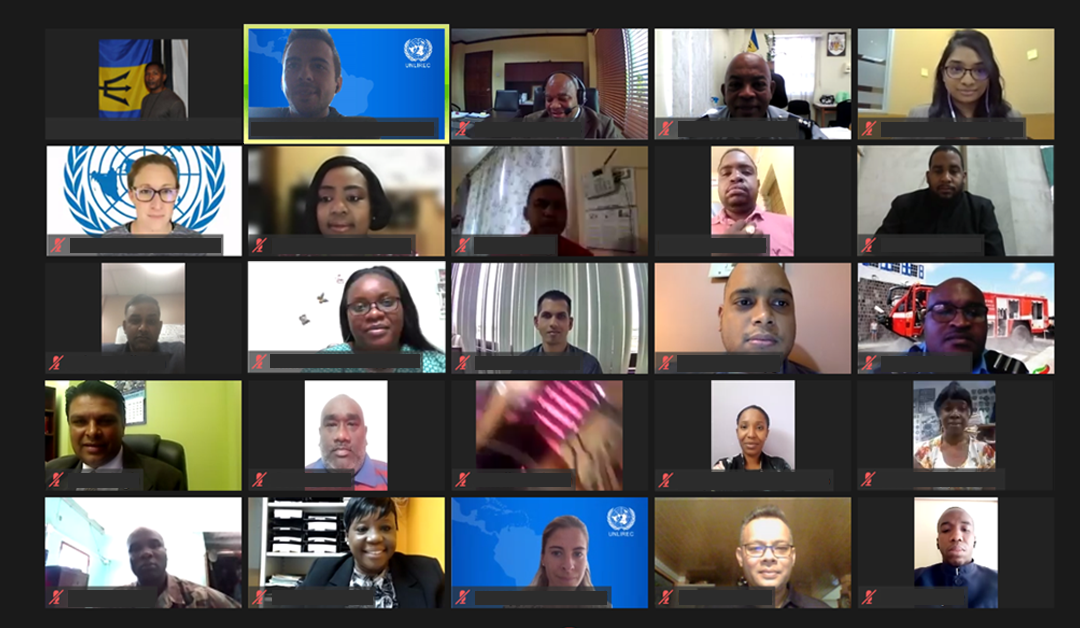
On 24 February 2022, the United Nations Regional Centre for Peace, Disarmament and Development in Latin America and the Caribbean (UNLIREC) hosted the regional webinar on ‘Building a Crime Gun Preventive Strategy in the Caribbean’ with seven CARICOM States. The purpose of the webinar was to discuss eight critical components for implementing preventive crime gun strategies.
Building a preventive crime gun strategy aims at effectively identifying and apprehending shooters and interdicting illicit firearms and ammunition, ultimately reducing the levels of armed violence. The following eight critical components of a successful crime gun preventive strategy were presented: stakeholder buy-in, regional approaches, ballistic imaging, overlaying technologies, knowing offenders and how they interact, using a single intelligence unit, public buy-in and, in the future, expanding a preventative strategy. UNLIREC also highlighted that collaborative efforts between relevant stakeholders, in particular law enforcement and prosecutorial agencies, innovation and ballistic imaging are cornerstones to implementing an effective crime gun preventive strategy.
A total of 58 officials, including 15 women, from ministries of National Security, Police Forces, Defence Forces, and Forensic Laboratories States of the Bahamas, Barbados, Grenada, Jamaica, Saint Kitts and Nevis, Suriname and Trinidad and Tobago participated in the regional webinar.
This regional webinar, carried out in line with the 2001 UN Porgramme of Action on Small Arms and Sustainable Development Goal 16.4, contributes towards the implementation of Goal 3, ‘Bolster law enforcement capacity to combat illicit firearms and ammunition trafficking and their illicit possession and misuse’ of the Caribbean Firearms Roadmap, to regional efforts prevent illicit trafficking of firearms and ammunition, and ultimately reducing firearms-related crimes and armed violence in the Caribbean.
This webinar was made possible thanks to the support of the Government of the United States of America. It forms part of a series of five regional webinars under the US-funded project to support the implementation of the Caribbean Firearms Roadmap.
UNLIREC, as the regional organ of the UN Office for Disarmament, seeks to advance the cause of practical disarmament in Latin America and the Caribbean as part of its commitment to support Member States in their implementation of international disarmament and non-proliferation instruments, in particular, the 2001 UN Programme of Action on Small Arms.
On 15 February 2022, the United Nations Regional Centre for Peace, Disarmament and Development in Latin America and the Caribbean (UNLIREC) and the Caribbean Community’s Implementation Agency for Crime and Security (CARICOM IMPACS), in collaboration with the Government of Haiti, and with support of the Government of Germany, hosted a virtual Executive Seminar for the Advancement of Haiti’s National Action Plan for the implementation of the Caribbean Firearms Roadmap.
Haiti has adopted the ‘Roadmap for Implementing The Caribbean Priority Actions on the Illicit Proliferation of Firearms and Ammunition across the Caribbean in a Sustainable Manner by 2030’ (Caribbean Firearms Roadmap), which consolidates and builds upon the 2019 actions adopted by Caribbean Heads of Governments on addressing the illicit trafficking of firearms in the region.
The Roadmap serves as a base document for Haiti in the elaboration of its National Action Plan (NAP). It includes four main goals: (1) reinforce regulatory frameworks governing firearms and ammunition; (2) reduce the illicit flow of firearms and ammunition into, within and beyond the region; (3) bolster law enforcement capacity to combat illicit firearms and ammunition trafficking and their illicit possession and misuse; and (4) systematically decrease the risk of diversion of firearms and ammunition from government and non-government-owned arsenals. Each goal incorporates pre-defined actions and targets, recommended performance indicators, all in alignment with a timeline, which runs from 2020 to 2030, to coincide with the culmination of the 2030 Agenda for Sustainable Development.
Haiti therefore becomes the 12th State to commence concrete actions contemplated in the Caribbean Firearms Roadmap by taking steps to create its National Action Plan (NAP). A total of 18 representatives of the Office of the Prime Minister, Ministries of Justice and Public Security, Interior, Defense, Women’s Rights, Youth, Sports and Social action, National Commission for Disarmament, Dismantlement and Reinsertion, Airport Authorities, the Office de la protection du Citoyen (NHRC), Departmental delegations, with members of the German, Canadian and U.S. Embassies, and UNLIREC and CARICOM IMPACS participated in the NAP Executive Seminar. Participants discussed the Roadmap and steps needed to map out Haiti’s priorities, plans and timelines for implementing the Caribbean Firearms Roadmap. The successful implementation of the Roadmap will require both the concerted efforts of national authorities, as well as the timely, targeted and coordinated support of regional and international partners and donors.
UNLIREC and CARICOM IMPACS, as the main implementing partners, will lend technical assistance in the elaboration of the NAPs and in their successive implementation. The governments of Canada, Germany, United States of America and the United Kingdom have pledged support to the implementation of the Caribbean Firearms Roadmap.
UNLIREC, as the regional organ of the UN Office for Disarmament, seeks to advance the cause of practical disarmament in Latin America and the Caribbean as part of its commitment to support Member States in their implementation of international disarmament and non-proliferation instruments, in particular, the 2001 UN Programme of Action on Small Arms.
On 3 December 2021, the United Nations Regional Centre for Peace, Disarmament and Development in Latin America and the Caribbean (UNLIREC), in collaboration with the Governments of Germany and Trinidad and Tobago, hosted a National Firearms Licensing System Roundtable Meeting.
Trinidad and Tobago has embarked on an initiative to develop an integrated data management information technology system to improve stockpile management and reduce loopholes for diversion. The project seeks to streamline and digitise the Firearms Licensing Management System in Trinidad and Tobago, reduce loopholes for diversion and ensure compliance with the Arms Trade Treaty reporting Standards.
UNLIREC supported Trinidad and Tobago by hosting a roundtable meeting on national firearms licensing systems, with technical experts from the Royal Canadian Mounted Police’s Canadian Firearms Program, United Kingdom’s National Firearms Licencing System, Home Office and National Crime Agency and the Dominican Republic’s Laboratorio Balístico y Biométrico del Sistema Nacional de Armas (LABBS), all sharing national experience and best practices on computerising licensing processes.
Close to 50 representatives (27 women) of the Ministry of National Security, Strategic Services Agency, Office of Law Enforcement Policy, Forensic Science Centre, Firearms Appeal Board, Customs and Excise Department, and Trinidad and Tobago Police Service took part in the roundtable. Participants included the Minister of National Security, heads of the Police Service, Intelligence Agency, Customs Department and Forensic Laboratory as well as their subordinates responsible for the licencing firearm applicants.
This roundtable complements recent initiatives undertaken by Trinidad and Tobago including its adoption of the Caribbean Firearms Roadmap, and discussions to create its National Action Plan. The activities were made possible thanks to the generous support of the government of Germany and included experts from the United Kingdom, Canada and the Dominican Republic. The Roundtable on National Firearms Licensing Management Systems contributes towards the implementation of Goal 1 of the Caribbean Firearms Roadmap, Reinforce Regulatory Frameworks Governing Firearms and Ammunition and ultimately reducing firearms-related crimes and armed violence in the Caribbean.
UNLIREC, as the regional organ of the UN Office for Disarmament, seeks to advance the cause of practical disarmament in Latin America and the Caribbean as part of its commitment to support Member States in their implementation of international disarmament and non-proliferation instruments, in particular, the UN 2001 Programme of Action on Small Arms.
On 15 November 2021, the United Nations Regional Centre for Peace, Disarmament and Development in Latin America and the Caribbean (UNLIREC) hosted the regional webinar on ‘Combatting Ghost Guns’. The objective of the webinar was to discuss the fabrication methodology of privately made firearms, their parts and components, share best practices for investigating privately made firearms, and review the implications of these illicit firearms on forensic analysis.
Eleven CARICOM states, Antigua and Barbuda, Barbados, Bahamas, Belize, Grenada, Guyana, Jamaica, Saint Kitts and Nevis, Saint Lucia, Suriname and Trinidad and Tobago were invited for the webinar. Over 30 officials, including 16 women, from the ministries of Foreign Affairs, National Security/ Home Affairs, Ministry of Finance, Police Forces, Defence Forces, Forensic Laboratories, Public Prosecutors Offices, Intelligence Agencies and Customs of the 11 CARICOM States actively participated in the regional webinar.
UNLIREC presented on the characteristics of privately made illicit firearms also known as ghost guns, the materials and tools required to manufacture illicit firearms, important considerations for firearms investigators and shared international experience with investigations of ghost guns. In addition, important recommendations to consider during firearms and toolmark examination of privately made illicit firearms for forensic examiners were highlighted. UNLIREC recognized that the phenomenon of privately made illicit firearms, has not been reported by Caribbean States as prevalent in the region, however, it has the potential add to insecurity. Furthermore, the importance of collaboration between all stakeholders including law enforcement agencies, forensic departments, judiciary, and policy makers to effectively combat privately made illicit firearms was highlighted throughout the webinar.
This regional webinar, carried out in line with the 2001 UN Programme of Action on Small Arms and Sustainable Development Goal 16.4, contributes towards the implementation of Goal 3 of the Caribbean Firearms Roadmap, Bolster law enforcement capacity to combat illicit firearms and ammunition trafficking and their illicit possession and misuse, and ammunition, and ultimately reducing firearms-related crimes and armed violence in the Caribbean.
This webinar was generously sponsored by the United States of America. It forms part of a series of five regional webinars under the US-funded project ‘Combating of Illicit Firearms and Ammunition Trafficking in the Caribbean’.
UNLIREC, as the regional organ of the UN Office for Disarmament, seeks to advance the cause of practical disarmament in Latin America and the Caribbean as part of its commitment to support Member States in their implementation of international disarmament and non-proliferation instruments, in particular, the 2001 UN Programme of Action on Small Arms.