Insights from the Caribbean Firearms Roadmap States

Insights from the Caribbean Firearms Roadmap States

Antigua and Barbuda

Author: Travis Crump, Sergeant, Royal Police Force of Antigua and Barbuda

As the Focal Point for Antigua and Barbuda, I write to share on the progress in Implementing the Caribbean Firearms Roadmap from my point of view.

Antigua and Barbuda’s National Action Plan (NAP) under the Caribbean Firearms Roadmap (CFRM) has seen notable successes and challenges since its inception. […]

The Bahamas

Author: Jennifer Bethel, Director of Research and Development Section, Ministry of National Security

The Bahamas’ National Action Plan was approved in 2024 by the Cabinet of The Bahamas. With approval, the National Committee sought to operationalize the Caribbean Firearms Roadmap using select priority areas that aligned with national context. Specifically, The Bahamas assessed its priority areas and chose context-driven actions that would serve to advance the State’s efforts to combat firearms trafficking across the four main goals. […]

Trinidad and Tobago

Author: Renee Adimoolah, nternational Affairs Coordinator, Ministry of National Security

Trinidad and Tobago’s approach to developing a National Firearms Action Plan, reflects a desire to design an effective strategy that fosters inclusivity and shared responsibility amongst stakeholders, as well as address the root causes of firearms proliferation. Additionally, the approach acknowledges that for the Plan to be sustainable, robust monitoring and evaluation mechanisms must be integrated into the overall framework from the beginning. […]

Previous posts

The Bahamas

Author: Jennifer Bethel, Director of Research and Development Section, Ministry of National Security

The Government of The Bahamas understands that safety and security undergirds the nation’s socio-economic development. The Government is keenly aware that regional security is a concern that involves threats to both the safety and stability of the Caribbean. […]

Antigua and Barbuda

Author: Atlee Rodney, Commissioner of Police, Royal Police Force of Antigua and Barbuda

Greeting from the twin island state of Antigua and Barbuda. In recent years, the Caribbean has encountered a growing challenge: the illicit trafficking of firearms and by extension, humans through our region. In Antigua and Barbuda, we’re all too familiar with the consequences of this pervasive issue, which not only threatens public safety but also hinders our nation’s progress. As we navigate these complexities, the UNLIREC Caribbean Firearms Roadmap has emerged as a beacon of hope in our efforts to enhance security and reduce firearm-related crimes. […]

Haiti

Author: Ralph Stanley Jean Brice, Inspector General, National Police of Haiti

The implementation of Haiti’s National Action Plan for the Caribbean Firearms Roadmap has been marked by a number of challenges to overcome, but also by notable accomplishments so far. […]

GenerAcción Paz: building dreams, disarming violence

GenerAcción Paz: building dreams, disarming violence

The United Nations Regional Center for Peace, Disarmament and Development in Latin America and the Caribbean (UNLIREC) launches the first edition of the GenerAcción Paz programme, which aspires to empower Latin American and Caribbean youth to create a region free of armed violence. The application process isopen from April 24 to May 31.

The call is aimed at young Spanish speakers between the ages of 18 and 29 at the time of participating in the programme (born between March 31, 1995 and July 1, 2006) living in Latin America and the Caribbean. Young people of various profiles and fields are invited to apply. 10 standout participants will be selected on the basis of their active participation in youth networks or associations, their organizational and leadership skills, as well as their interests and initiatives to promote a region free of armed violence.

The application process consists of two phases. Interested candidates are invited to submit their applications until 31 May, and send their CV to the link provided in the form. Shortlisted candidates will be notified on June 21 with instructions on the second phase, which will have to be completed by June 30. The ten selected candidates will be notified on July 8.

The programme, which will span a nine-month period from July 2024 to March 2025, counts with a regional focus and three main stages:

  • Online training (July to November 2024): participants will be able to interact through a series of webinars with high-level regional arms control experts. Different topics will be discussed: illicit trafficking of weapons and new technologies, gender impact of armed violence, weapons in schools, and the relationship between disarmament and development. Project management training workshops will also be organized.
  • Sponsored study visit to Lima, Peru (end of November 2024).
  • Project implementation (December 2024 to April 2025): in the third phase, participants will developand implementpersonalprojects in their local or national contexts, with personalized support from UNLIREC and selected mentors.

The GenerAcción Paz programme contributes to the implementation of the General Assembly resolutions on Youth, Peace and Disarmament as well as the 2030 Agenda for Sustainable Development. The project is financed by funds from the United Nations Trust Facility Supporting Cooperation on Arms Regulation (UNSCAR).

All questions may be directed to youth@unlirec.org.

Meet the Women, Forces of Change

Meet the Women, Forces of Change

Adriana Bernacchi

PhD in Biological Sciences, expert in the non-proliferation of biological and chemical weapons, and independent consultant for the OAS Inter-American Committee against Terrorism.

Aimee Therese Faye

Senior Disarmament, Demobilization, and Reintegration (DDR) Officer currently serving with the United Nations Integrated Office in Haiti (BINUH).

Arianna Pedraza

Young Colombian leader and creator of Río Adentro in the 1st edition of UNLIREC’s GenerAcción Paz program.

Carina Solmirano

Head of the Arms Trade Treaty Secretariat with 20 years of international security experience, specialized in disarmament and non‑proliferation.

Carla Álvarez

Professor and researcher at IAEN in Ecuador, specialized in security and violence, with a feminist and regional perspective.

Carmen van Dijk

Deputy Director of Security Policies at the Directorate of National Security of the Republic of Suriname. National Focal Point for the Caribbean Firearms Roadmap.

Catalina Vera

Alternate Representative at the Mission of Chile to the OAS. She leads the work on hemispheric security, cybersecurity, transnational organized crime, arms control, and gender issues.

Cecilia Olliveira

Investigative journalist on drug trafficking and violence in Brazil. Founder of Fogo Cruzado and author of How a Militiaman Is Born (2025).

Claudia Garcia Guiza

Political Affairs Officer at the United Nations Office for Disarmament Affairs (UNODA). She leads the United Nations Register of Conventional Arms (UNROCA) and the UN Report on Military Expenditures (UNMILEX).

Constanza Carrasco

Mexican specialist in gender and human rights. Advocacy Coordinator at Intersecta, a feminist organization for equality.

Delfina García Hamilton

Women, Peace and Security Governance Coordinator at UN Women for the Americas and the Caribbean, with more than 15 years of experience in gender, inclusion, and human development.

Elizabeth Huanca Coila

Specialist in illegal mining and social participation at the General Secretariat of the Andean Community, with over 20 years of experience in gender, environment, and territorial management.

Erica Brown

Detective and specialist in ballistics and forensic chemistry with the Jamaica Constabulary Force. Speaker and advocate for community initiatives on armed violence prevention.

Folade Mutota

Co‑founder of WINAD, leading small arms control initiatives in the Caribbean centered on women’s rights and leadership.

Gisela Luján Andrade

Founder and Director of Perú por el Desarme, a civil association that addresses the risks of autonomous weapons systems and promotes a culture of peace in Latin America.

Gordina Hector-Murrell

Director of Cyber Security in Antigua and Barbuda and technical expert on cybersecurity and cybercrime. Member of the Women in Cyber network.

Hazel Villalobos Fonseca

Technical Manager and Coordinator of the Think Tank at the Foundation for Peace and Democracy (FUNPADEM), and member of the international Stop Killer Robots campaign.

Ivonne Garcés-Almeida

Director of Human Rights and Peace at the Ministry of Foreign Affairs and Human Mobility of Ecuador. She leads the development of Ecuador’s 2025–2029 Women, Peace and Security Plan.

Jasmin Louisy

M&E Officer for the implementation and impact of disarmament-related treaties and conventions in Guyana, within the Ministry of Home Affairs. Focal Point for the Caribbean Firearms Roadmap.

Jennifer Bethel

Director of Research and Development at the Ministry of National Security of The Bahamas. Leads the Caribbean Firearms Roadmap and works on the Women, Peace and Security agenda.

Jennifer Chox Ixmatá

Young Guatemalan leader and Co-founder of ASODI. Participant in the 1st edition of UNLIREC’s GenerAcción Paz program.

Josefina Reynoso Chicón

Director of the Center for Security and National Defense Studies at Funglode, specialist in security and defense.

Julia Elizabeth Rodríguez Acosta

Salvadoran diplomat and Minister Counsellor at the UN, specialist in disarmament, cybersecurity, and international security.

Juliana Moreira De Aguiar

Journalist at the Fogo Cruzado Institute in Brazil and participant in the 1st edition of UNLIREC’s GenerAcción Paz program.

Julieta Arnau Arroyo

Country Director of MAG in Peru and the Northern Triangle, specialist in arms management, disarmament, and armed violence reduction.

Karla Paula Reyes Allpoc

Young Peruvian leader, founder of the Palenque Collective, and participant in the 1st edition of UNLIREC’s GenerAcción Paz programme.

Katherine Aguirre

Researcher at the Igarapé Institute and coordinator of AMASSURU — the Women’s Network on Security and Defense in Latin America and the Caribbean. GENSAC focal point.

Lucía Centellas

Executive Director of Esfuerzos de Mujeres Bolivianas, expert in gender, peace, security, and disarmament.

Luciana Vázquez

Consultant at CICTE-OAS and director of WENS, specialist in biosafety and biosecurity.

Maria Eugenia Villarreal

Member of the Steering Committee of the International Campaign to Abolish Nuclear Weapons (ICAN) and Regional Coordinator of SEHLAC.

Martha Mariana Mendoza Basulto

International Relations Officer at OPANAL, Mexican specialist in disarmament, international security, and gender.

Marysol González Hormiga

Professional at the National Institute of Health, expert in public health, biosafety, biosecurity, and international security.

Maura Altagracia Martínez Paulino

Director of the Specialized Prosecutor’s Office against the Trafficking, Carrying and Illegal Possession of Firearms in the Dominican Republic. Specialist in criminal law and constitutional justice.

Mayda Alejandra de León Wantland

Vice Minister for Violence and Crime Prevention in Guatemala, with over 20 years of experience in arms control and violence prevention.

Meylán Ramos

Founder of MAREA in Mexico, promotes youth-led peace and creative disarmament through art.

Migdonia Nohemy Ayestas

Professor at UNAH and coordinator of the National Violence Observatory, specialist in security and violence prevention.

Milagros Winkelried

Lawyer specialized in international security, disarmament, and arms control. Legal Specialist at the Ministry of Foreign Affairs of Peru, coordinating the national mechanisms CONAPAQ and CONATIAF, and the implementation of UN Security Council Resolution 1540.

Nadine Bushell

Assistant Director of Projects at CARICOM IMPACS, with over 20 years of experience in development and project management.

Pamela Huerta Bustamante

Peruvian investigative journalist, founder of Al Margen and member of Amazon Underworld.

Pier Angelli De Luca Maciel

Head of the Conventional Arms Section at the OAS, Brazilian specialist in disarmament and public security.

Renee Adimoolah

International Affairs Coordinator at Trinidad and Tobago’s Ministry of National Security. Specialist in international and regional security, with a focus on CARICOM affairs and transnational organised crime.

Ruth Carey Lewis

Consultant in violence prevention, community security, and justice reform in the Caribbean. She has been responsible for developing Jamaica’s protocol to address firearm-related incidents in schools for UNLIREC, under the SALIENT Project.

Sandra Cabrera

Police Commissioner and Head of the School Police Division of Honduras. Specialist in community-based prevention and in the prevention of violence against children and adolescents.

Sofía Rojas

Young Costa Rican leader, founder of Contando Ovejas and participant in the first edition of UNLIREC’s GenerAcción Paz programme.

Tamiris de Jesus

Project and Partnerships Office Manager at the Sou da Paz Institute. Specialist in project management, resource mobilization, and strategic planning focused on social impact and sustainability.

Wendy Caishpal Jaco

Salvadoran lawyer, founder of Ahuachapán sin Barreras and Humanium Metal ambassador, recognized for activism on disability rights and survivors of armed violence.

Ana Sofia Carranza

Programme Coordinator, Gender and Youth Programme at UNLIREC.

Belen Bianco

Senior Project Advisor, Conventional Arms Control Programme at UNLIREC.

Diana Bernard

Monitoring and Evaluation Specialist at UNLIREC for the Caribbean Firearms Roadmap.

Elena Batani

Project Advisor for Youth and Disarmament at UNLIREC.

Katja Boettcher

Deputy Director of UNLIREC.

Mercedes Allerbon

Project Advisor, Gender and Youth Coordination at UNLIREC.

Soledad Urruela

Director of UNLIREC.

4th Annual Meeting of States of the Caribbean Firearms Roadmap

4th Annual Meeting of States of the Caribbean Firearms Roadmap

From 13 to 14 November 2024, officials from the Caribbean Community (CARICOM) and the Dominican Republic will gather virtually for the 4th Annual Meeting of States of the Caribbean Firearms Roadmap.

States, together with partners and donors from the international community, will meet virtually to discuss the implementation of the Roadmap and renew their commitment to addressing illicit firearms and ammunition trafficking.

The meeting is organized by the CARICOM Implementation Agency for Crime and Security (IMPACS) and the United Nations Regional Centre for Peace, Disarmament and Development in Latin America and the Caribbean (UNLIREC).

The meeting, which is funded by Germany, envisages a high-level meeting of Ministers on 13 November as well as a one-day working level exchange between national focal points established under the Caribbean Firearms Roadmap on 14 November.

For further information please contact: secretary@unlirec.org.

Women, Forces of Change: The Podcast

Women, Forces of Change: The Podcast

UNLIREC launches Women, Forces of Change: The Podcast, celebrating the voices of women leaders from Latin America and the Caribbean working in disarmament and security.

Over 10 episodes released between 8 November and 8 December 2024, diplomats, experts, and changemakers share their journeys, challenges, and visions for a safer, more inclusive world.

Episodes are available below and on Spotify, with conversations in English, Spanish, and French.

Discover how women are driving change in peace and security!

“Women, Forces for Change: The Podcast” is funded by Canada

Episode 1: Carina Solmirano

[Available in Spanish] Starting 1 December 2024, Carina Solmirano will assume the role of Head of the Secretariat of the Arms Trade Treaty (ATT), following her selection at the Tenth Conference of States Parties in August 2024, becoming the first Argentinian and Latin American woman to assume this responsibility. She has more than 20 years of experience in the field of disarmament, peace and international security.

In this episode of “Women, Forces of Change. The Podcast”, Carina Solmirano shares how her path has led her to work for justice and human rights, always with a humanitarian approach.

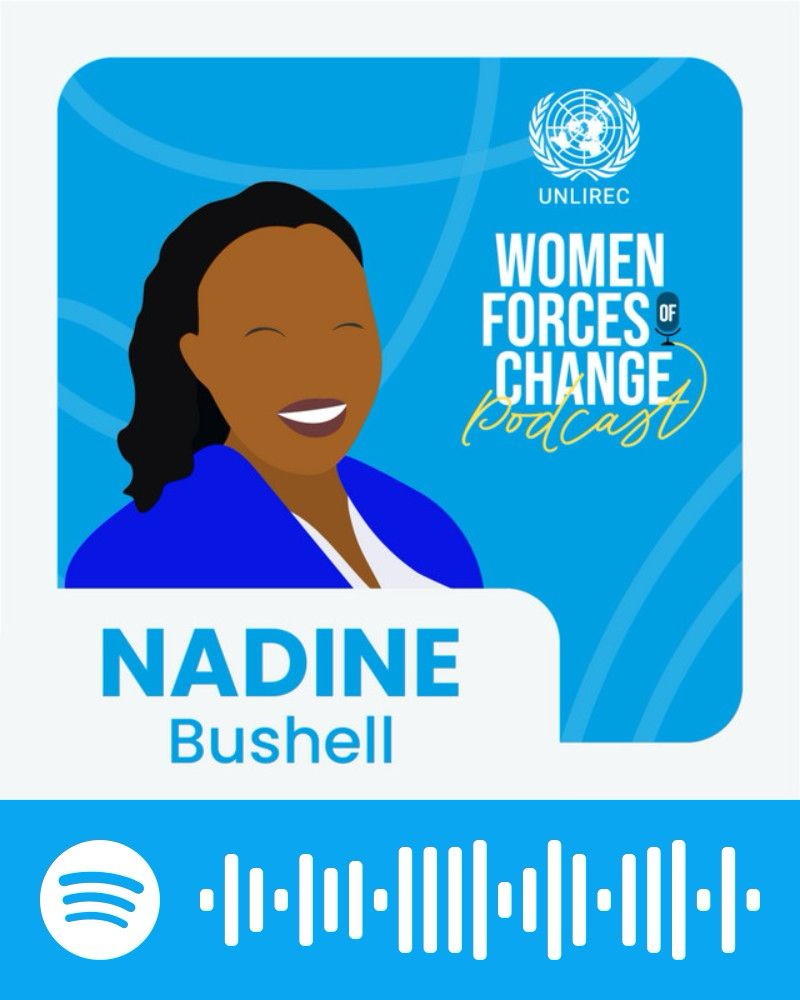
Episode 2: Nadine Bushell

Nadine Bushell is a leader in security and development, currently serving as the Acting Assistant Director of Projects at the CARICOM Implementation Agency for Crime and Security (IMPACS). With a wealth of experience in both government and international organizations, including the United Nations Development Programme (UNDP), she leverages her expertise to advance initiatives aimed at building a safer and more secure Caribbean region.

In this episode, Nadine Bushell shares her journey, from her early aspirations to pursue a career in law to her deep commitment to social development, specifically in the field of the security.

Episode 3: Clarissa Rios

[Available in Spanish] Clarissa Rios is a scientist and global disarmament leader from Peru. With a PhD in molecular biology, Clarissa Rios works at the UN Office for Disarmament Affairs, focusing on preventing the use of biological weapons and promoting peace.

In this episode, she shares how her love of biology began and how the understanding of the impact of science on global security inspired her to work for peace.

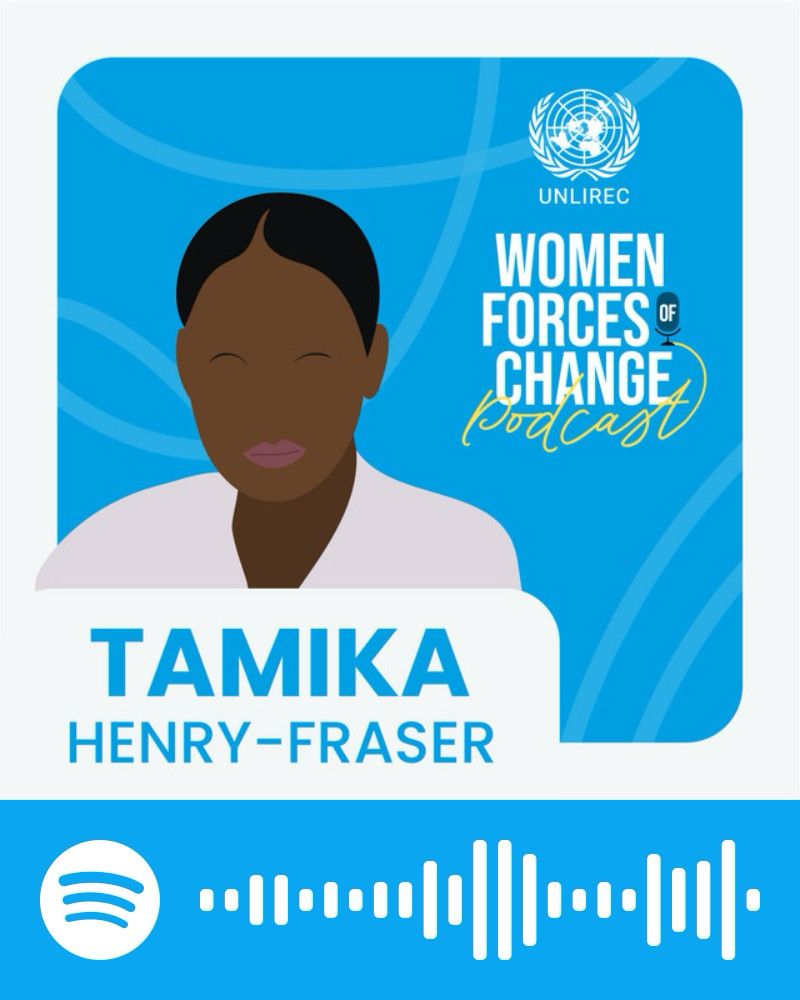
Episode 4: Tamika Henry

Tamika Henry is a former Forensic Technologist with the Guyana Police Force and Senior Science Officer at the Guyana Forensic Science Laboratory. Currently, she supports the OPCW Technical Secretariat in advancing the global implementation of the Chemical Weapons Convention.

In this episode, Tamika Henry shares how her passion for conflict resolution and the application of science led her to work towards enhancing security.

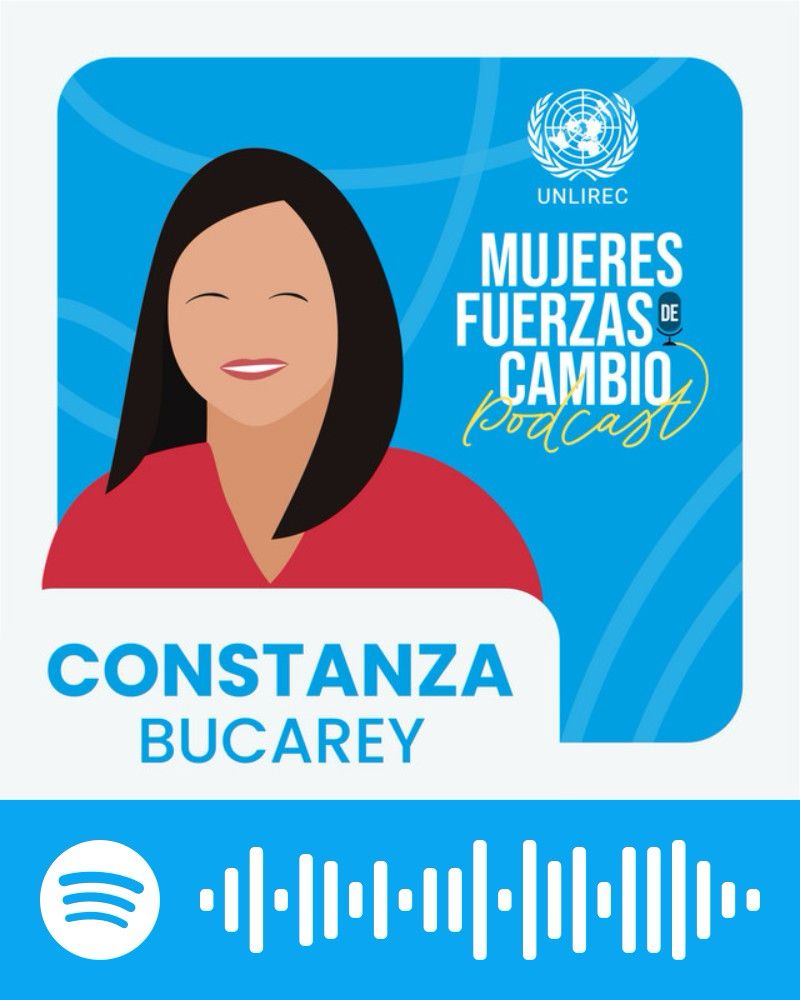
Episode 5: Constanza Bucarey

[Available in Spanish] Constanza Bucarey is a leading Chilean professional with over 16 years of experience in customs risk management, border security and strategic trade control in Latin America.

Her message to young women: “Be confident in your role, dare to explore male-dominated fields. You will encounter challenges, but also people who will support you.”

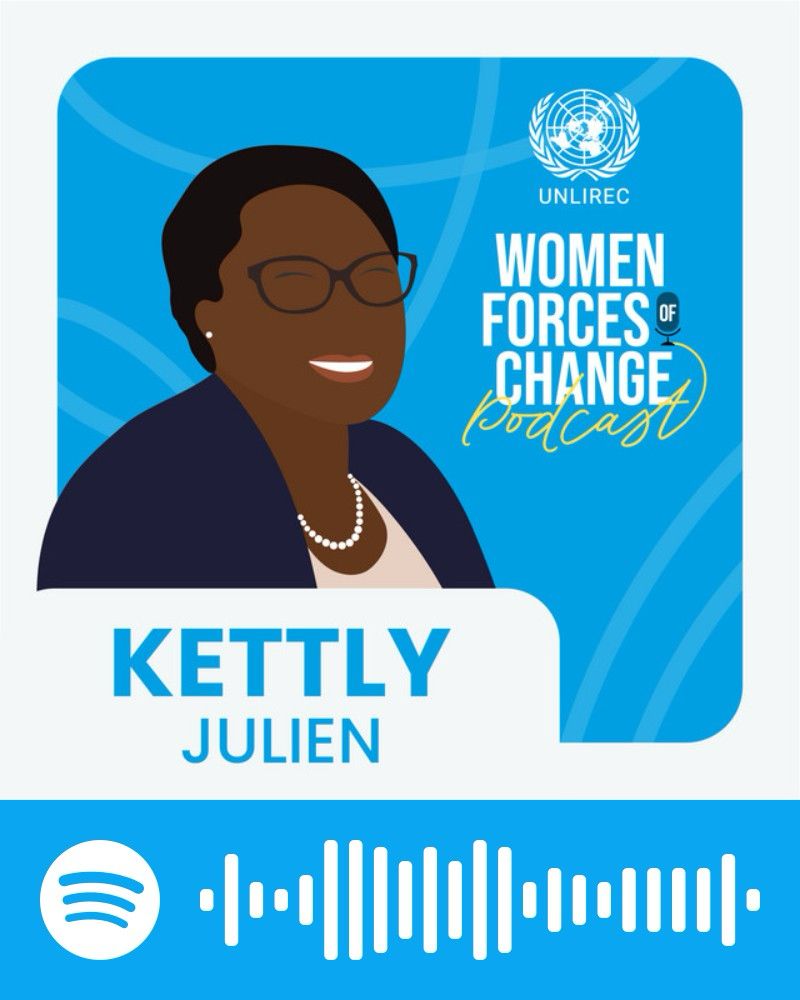
Episode 6: Kettly Julien

[Available in French] Kettly Julien is the Executive Director of the Institut Mobile d’Éducation Démocratique (IMED) and active member of the National Commission for Disarmament, Demobilization and Reintegration (CNDDR) of Haiti.

In this episode, she tells us how she has overcome challenges since her childhood and turned her fears into strengths to fight for social justice and human rights. She also shares how her work has contributed to the pacification of communities in Haití.

“Haitian society is patriarchal, and women face great obstacles, but we must fight for equality, shoulder to shoulder with men, without sexism.”

Episode 7: Juliana Aguiar

[Available in Spanish] Juliana Aguiar, Brazilian journalist and human rights defender, shares with us her valuable testimony and her tireless work to give visibility to voices that have historically been silenced.

In this episode, Juliana Aguiar tells us how her interest in human rights led her to work at the Fogo Cruzado Institute, where she monitors violence in more than 50 Brazilian cities making visible the violence and gun policies that affect so many women.

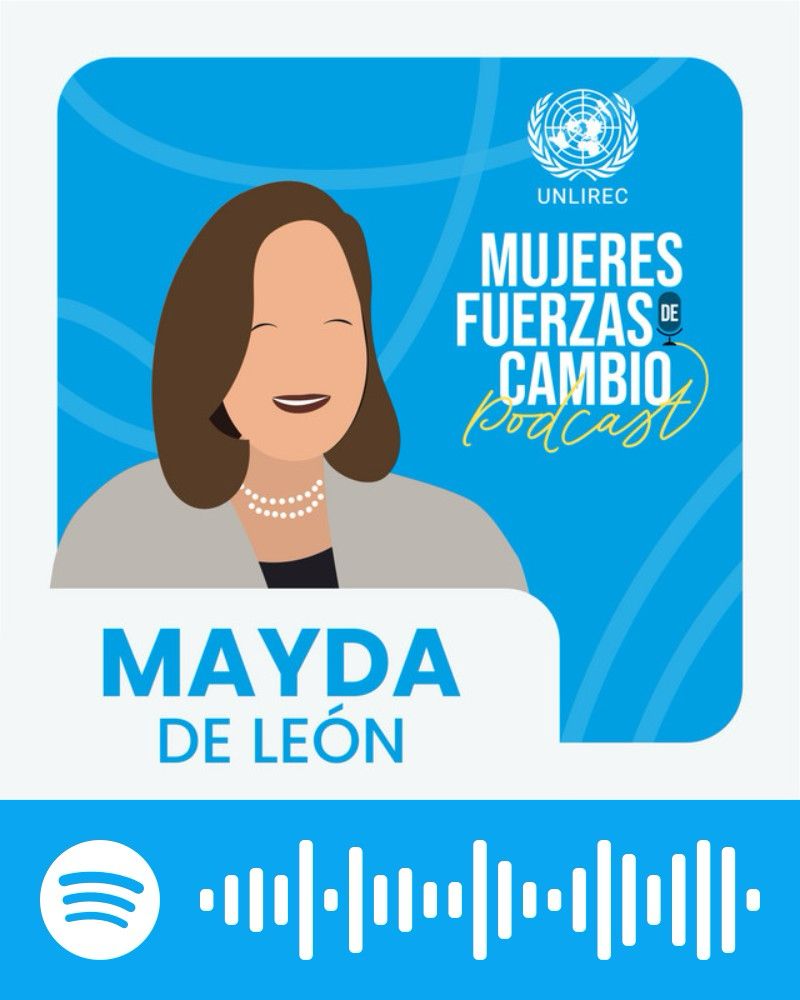
Episode 8: Mayda de León

[Available in Spanish] Mayda De León is well known for her work on prevention of violence and arms control. With more than 20 years of experience, Mayda shares with us her journey, her commitment to human rights and her current leadership role as Vice Minister of Violence and Crime Prevention in Guatemala.

In this episode, Mayda De León tells us how, from a young age, she became interested in issues of justice, human rights and later in security, a field in which women were beginning to make their presence felt but which was still dominated by men.

“We women are powerful, and we are truly Forces of Change”, is Mayda’s message to the new generations of women in security.

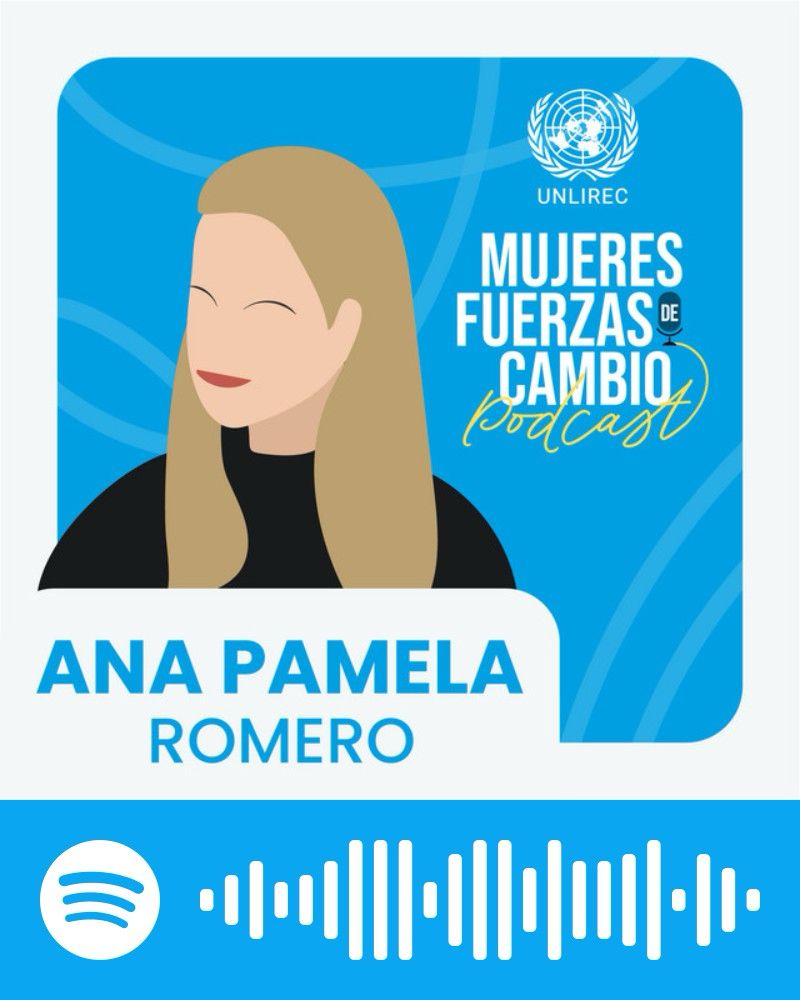
Episode 9: Ana Pamela Romero

[Available in Spanish] Ana Pamela Romero, a Juris doctor and criminalistics expert from Mexico. Over the past 16 years she has held several positions as a researcher, professor and, currently, national director of the Law Program at Tecnológico de Monterrey. Since 2014, she has worked as an expert consultant for UNLIREC in legal, forensic and gender perspective in the investigation of firearms crimes.

In this episode, she tells us about the path that led her from the field of justice to the field of peace and disarmament; in her own words, “we cannot think of justice without peace or peace without justice”.

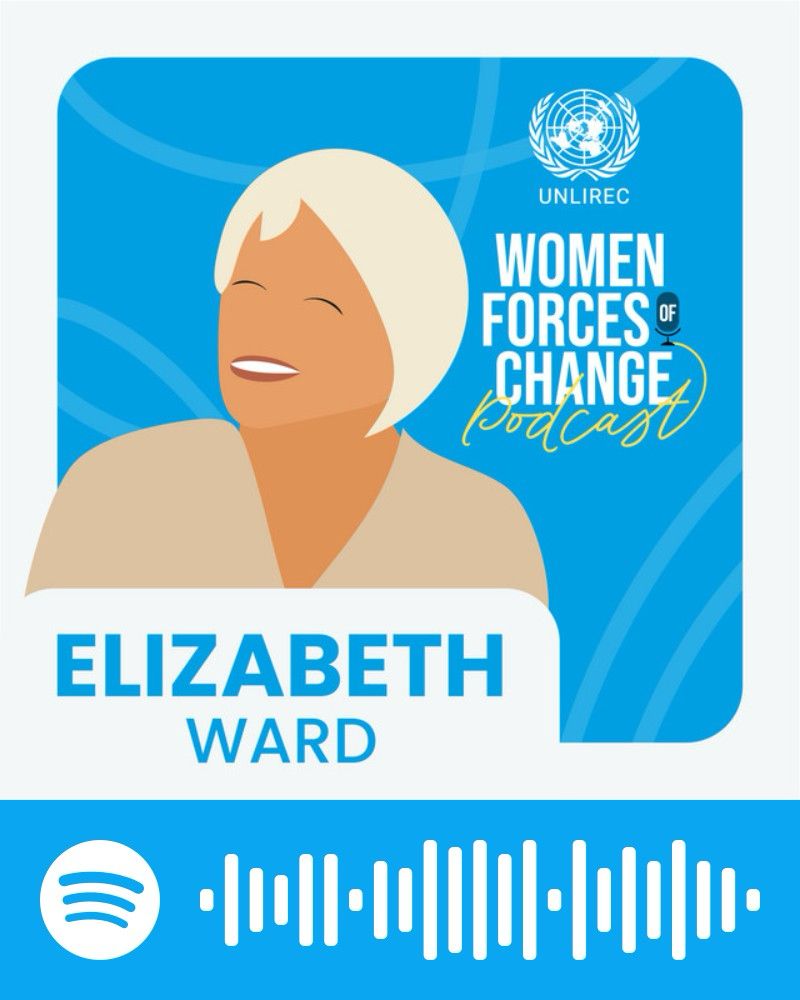
Episode 10: Elizabeth Ward

Dr. Elizabeth Ward, a medical epidemiologist with more than 15 years of experience in violence prevention. She established the Jamaica Injury Surveillance System (JISS), which collects critical data on gunshot wounds and supports multi-agency efforts to reduce violent crime. Dr. Ward works with organizations such as WHO, PAHO, and UNICEF, focusing on strategies to address violence against children.

In this episode, she shares her interest and expertise in safety and highlights the essential role of women in driving change. “I’ve seen in hospitals that gun violence can be prevented,” she points out.

Episode 11: Bonus

We’re celebrating the fourteenth anniversary of the adoption of the UN resolution on women, disarmament, non-proliferation and arms control with a special episode featuring Maritza Chan Valverde, Permanent Representative of Costa Rica to the UN, and Dennis Francis, Permanent Representative of Trinidad and Tobago to the UN, who, together with Soledad Urruela, Director of UNLIREC, share with us their own experiences and encouraging messages to young women.